Expert professors often rely on their reading skills rather than any score or percentage. These are the indicators that actually possess importance:
A writing style or voice that doesn’t match you: Professors taught you for a whole year or semester; they know your habits very well. Like whether your paragraphs are short and simple or long and complex, which punctuation mistakes you repeat again and again, and how you use citations or evidence. A clean, formal assignment that does not match your previous work suddenly becomes prominent.
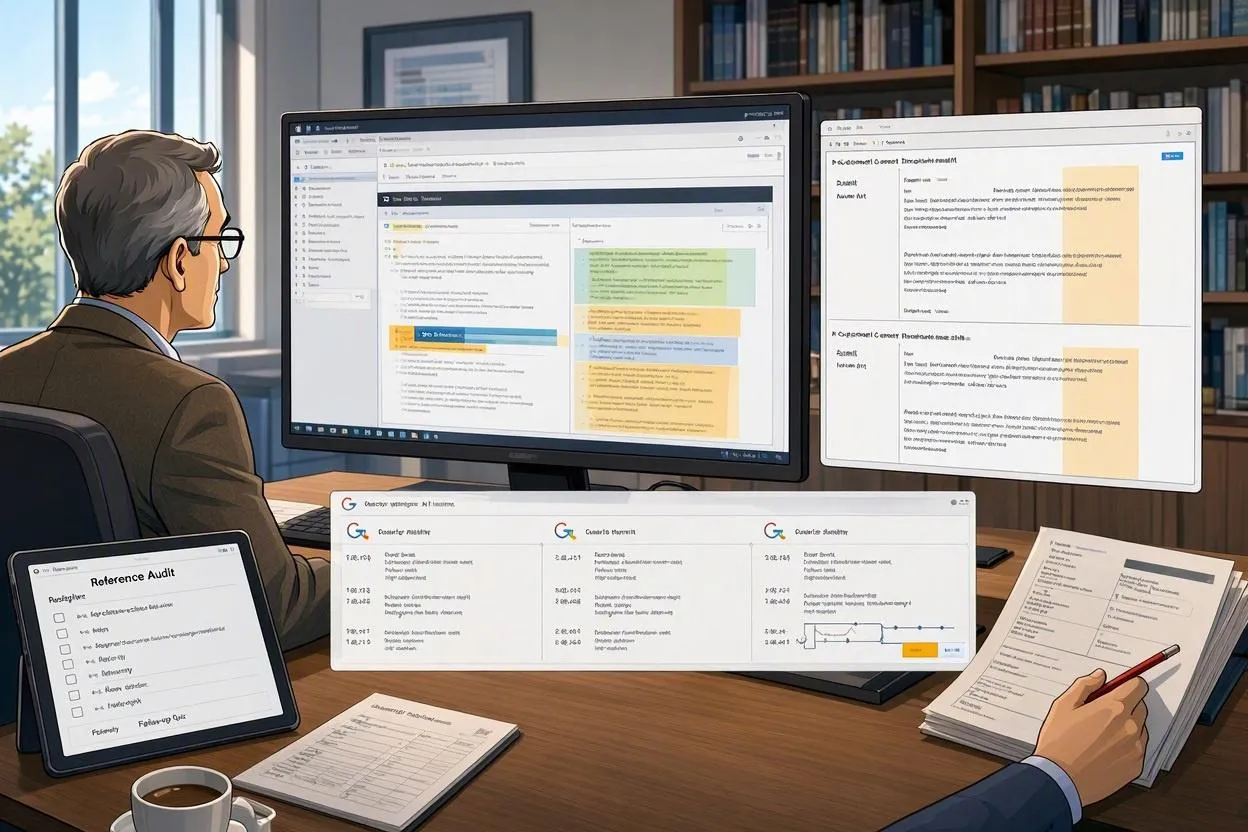
Such citations do not exist: AI models are known for inventing such citations themselves, which actually look real, in which any author, journal, and page number are written in the correct way, but in actuality, such a kind of essay does not exist. When professors find any reference and they do not find anything, then it becomes a red flag, and it is difficult to give any explanation.
Timeline of work, which explains the whole story: A writing history in any online or shared file, like a Google Doc, shows that this paper was written after various changes, reviews, or a whole text pasted at one time. To paste a paragraph at once does not prove anything alone, but it forces the professor to look more closely.
A general habit of unedited raw text: An unedited AI-written text often seen with the same kind of patterns: a plain opening, separating things into three groups, the forceful balance of “on one side this is, then on the other side that," and in the last, without telling new things, just repeating previous things.
Not being able to explain your own work: Often, a final decision-making moment is just like a common question. The person who wrote that paper himself explains their arguments as usual and easily understands their own terms. But the person who does not write it himself is often confused because he himself does not do the work on the paper.
Many students ask about specific questions?
Can professors get caught if you paraphrase ChatGPT?
Sometimes, but the reason is not the word structure. By paraphrasing sentences, the score of the detector may decrease due to small changes in writing, feeling less machine-like compared to raw output. But all other clues remain, such as a written voice that does not match the student's expression, invented references, or version history that indicates all text is pasted at once. If your course prohibits unapproved use of AI, then changing words does not change facts. It has a practical disadvantage also; the material that you yourself do not understand correctly, by writing it in your own words, makes such conversation that apparently looks confident, but in actuality it has no meaning, and a careful reader feels it immediately.
Can professors tell you if it's copy-pasted from ChatGPT?
Yes, direct copy-pasting is easily caught. It has the following reasons: Mistakes in formatting, like previous formatting remaining, different fonts, irregular spacing, or markdown symbols. Version history, like if draft history is in your files, then without any changes, suddenly thousands of words appear, creating doubts.
Is the ChatGPT-written code easily detected?
Identifying code is difficult because the solution to the same problem might be similar. Therefore, professors use the following ways instead of software: comparing assignments for suspicious similarity, pointing out functions or libraries that are not taught in class, or directly asking students to explain the code and perform it live.
Does the university or an employer know about your chat?
No, they can’t see your personal chats. They just see your submitted files, their standards, and the related records. Therefore, it is necessary to understand the institution's policies first.
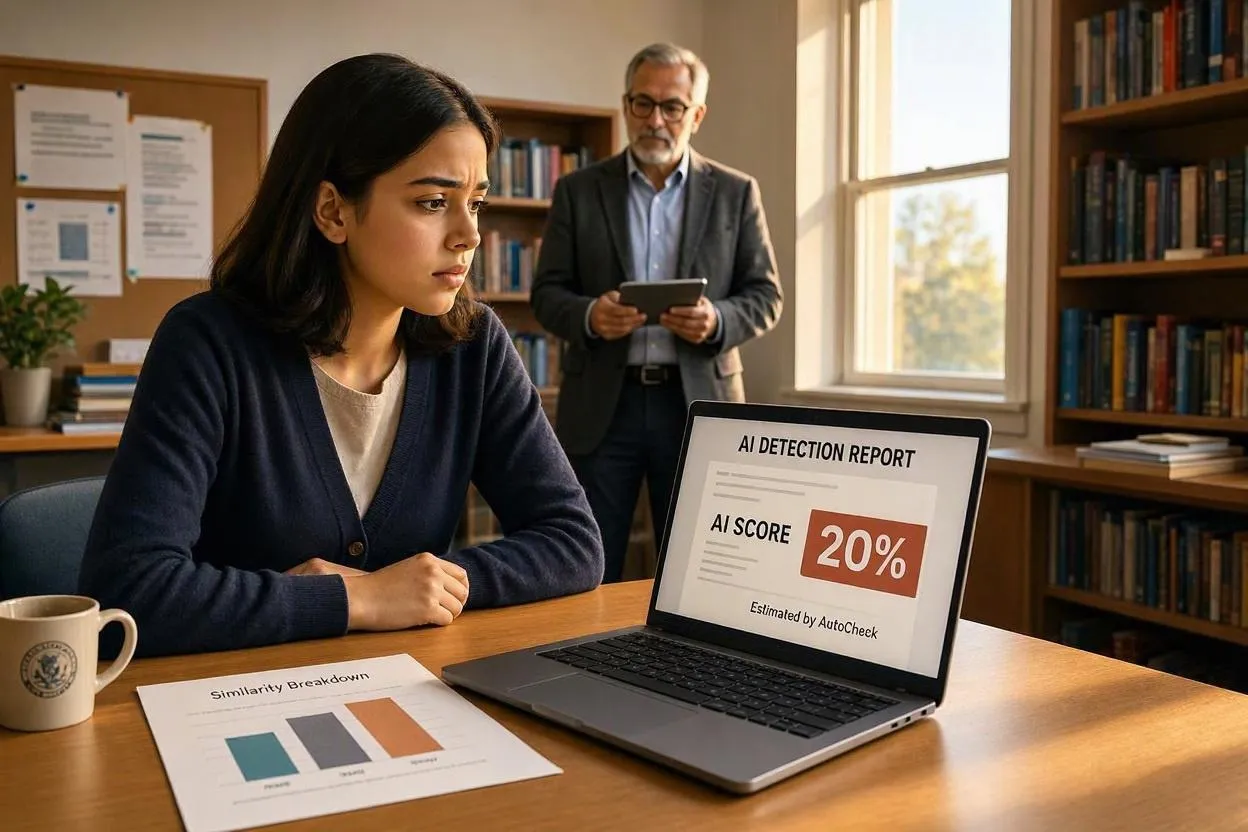
According to the available evidence, AI works better than making assumptions, but it is not so trustworthy that it can be considered final evidence.
OpenAI closed its AI detectors in 2023 because of giving wrong results and less accuracy. Research tells us that these tools are often called "writing AI," whose first language is not English, because their simple words and sentences often feel artificial to detectors. If you make changes yourself in the text, combine human and AI writing, or use new models, AI is difficult to detect. The tool-making companies themselves say that they do not consider their results final but consider them by combining them with other evidence.
When Detectors Make Mistakes
Detectors can make mistakes in both ways. They may fail to detect AI text in which changes were made or which combines with human-written sentences, and on the other hand, they may mark AI text that is completely written by AI.
The writers who suffer from false positives are those who write in a very simple, formal, and structured way; people who write in English with caution instead of their mother tongue; those writing on technical or practical subjects, where use of similar words and sentence structures is natural; and short paragraphs, which are considered less reliable compared to long paragraphs, because detecting AI patterns in these is harder.
Due to this weakness, responsible institutions, before taking any step, demand further evidence. The detectors' work must be for investigation, not for a final decision.
If Your Own Writing Gets Flagged
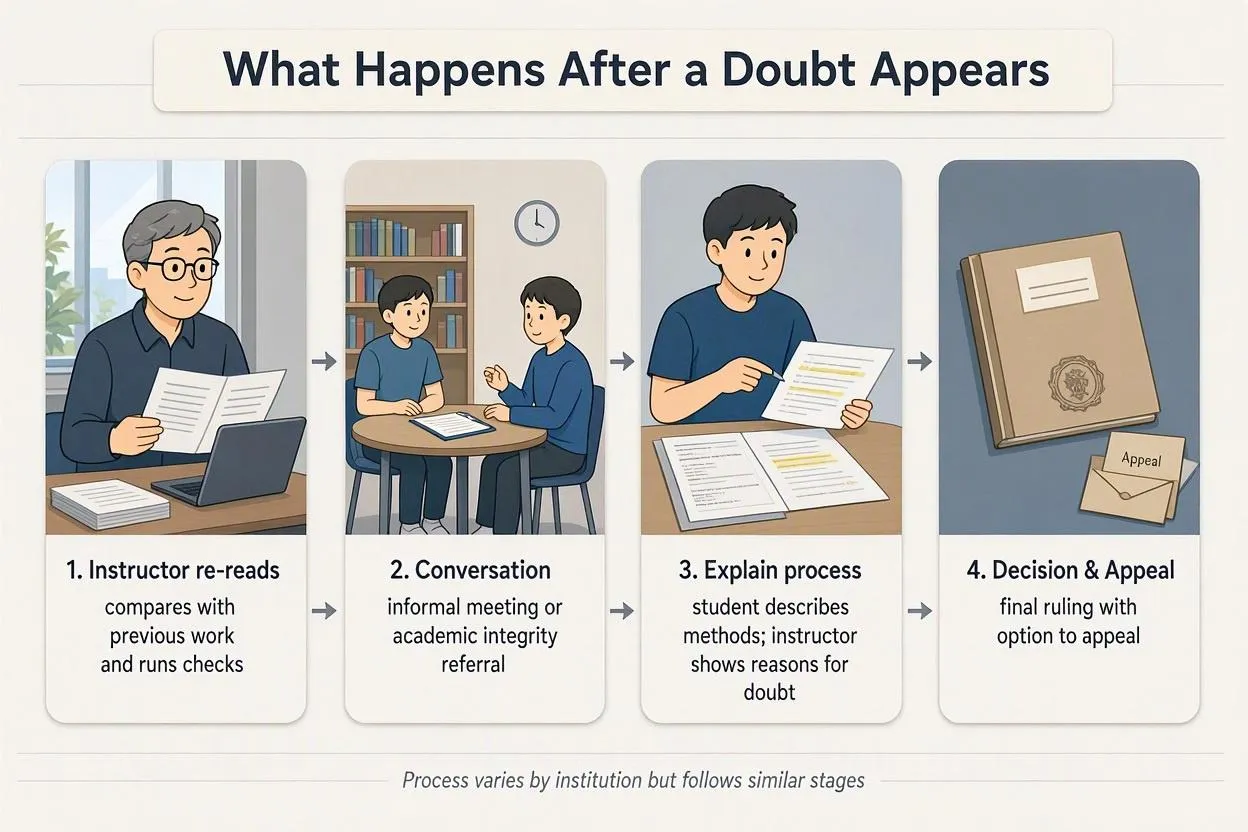
Not hesitate questions being asked by the professors. Just follow the following steps:
● Ask your professor what the reason for the doubt is (detector score, writing style, or citation mistakes)
● Present your writing evidence, like notes, outlines, old drafts, search history, and revision history.
● Clarify your point of view to the professor or write a small paragraph in front of them. Your knowledge itself is major evidence.
● If you are not satisfied with the decision, then use the institution's appeal process.
Precautions for Future:
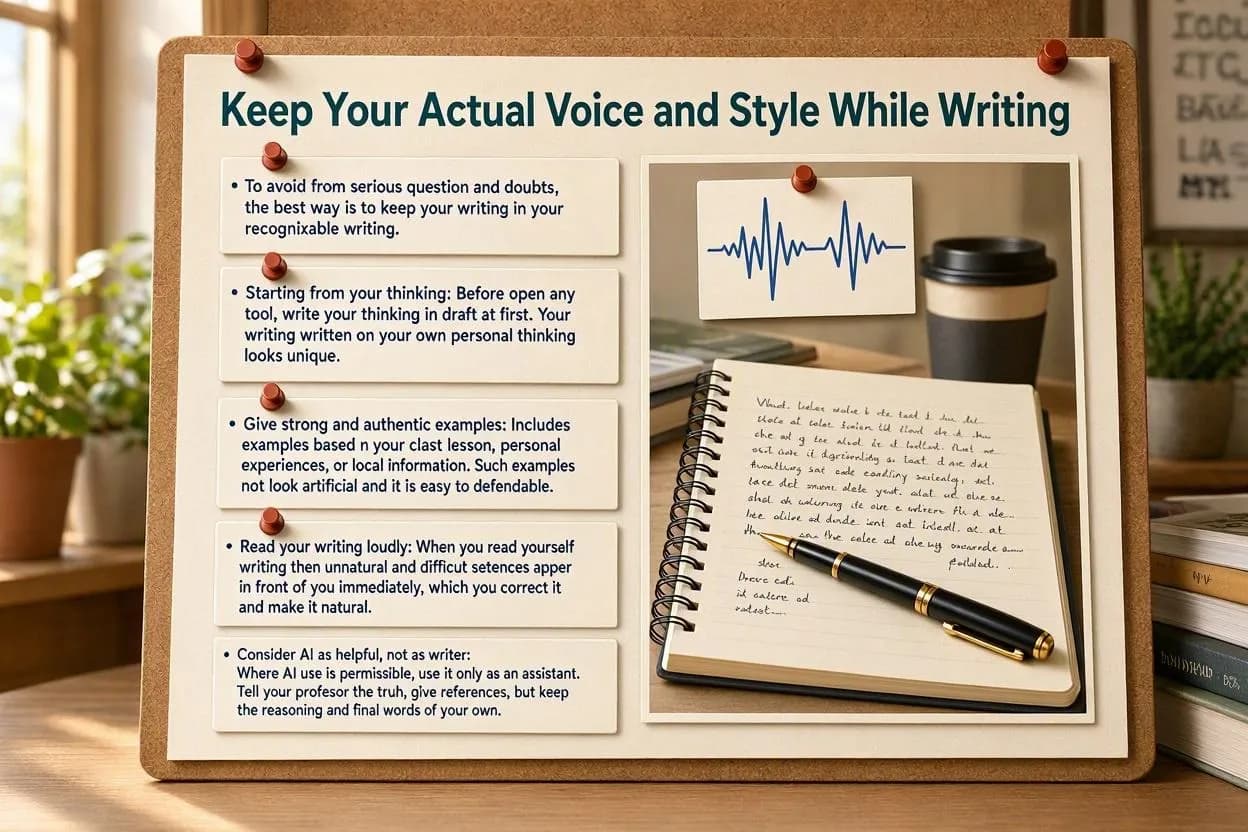
● Always write in software that keeps version records.
● Secure your notes, reference links, and PDFs.
● Note the date by which you start and end your work.
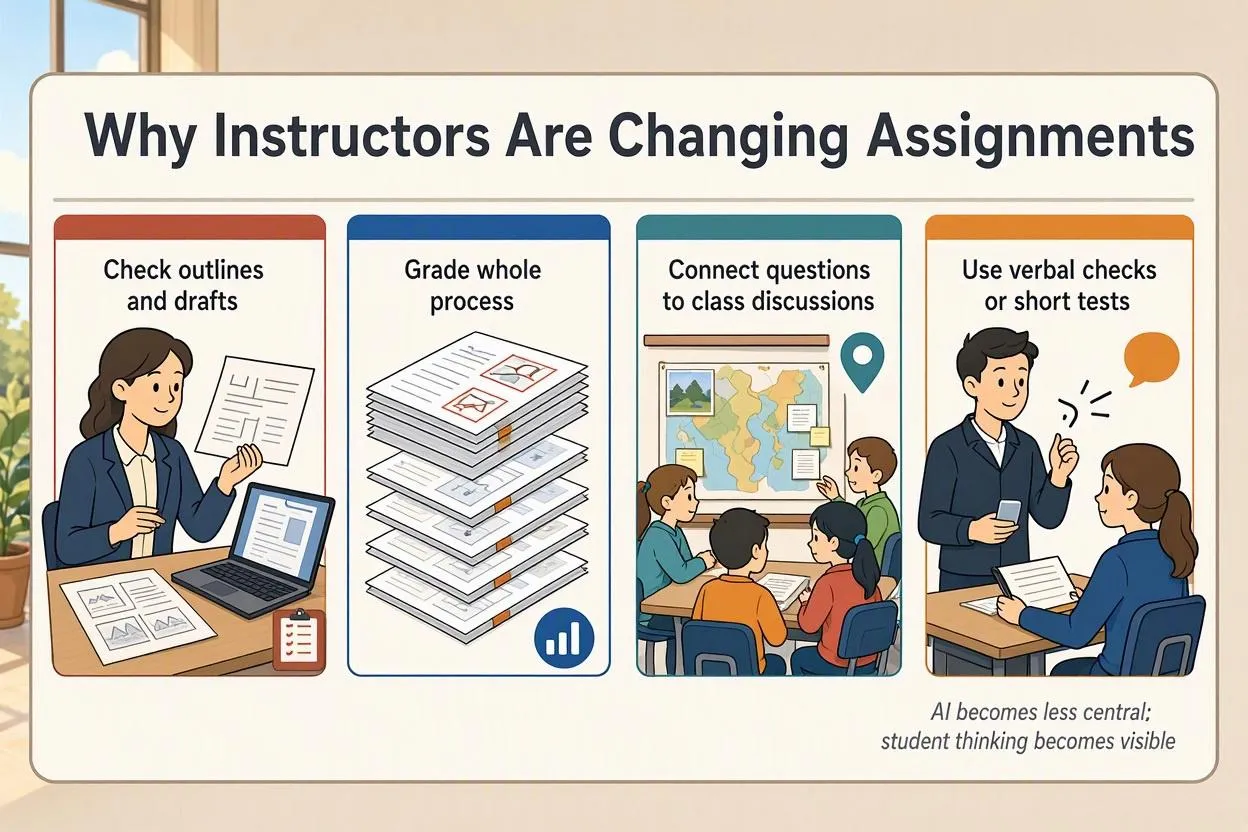
Why Instructors Are Changing the Methods of Assignments and Homework